
What Is IPTV?
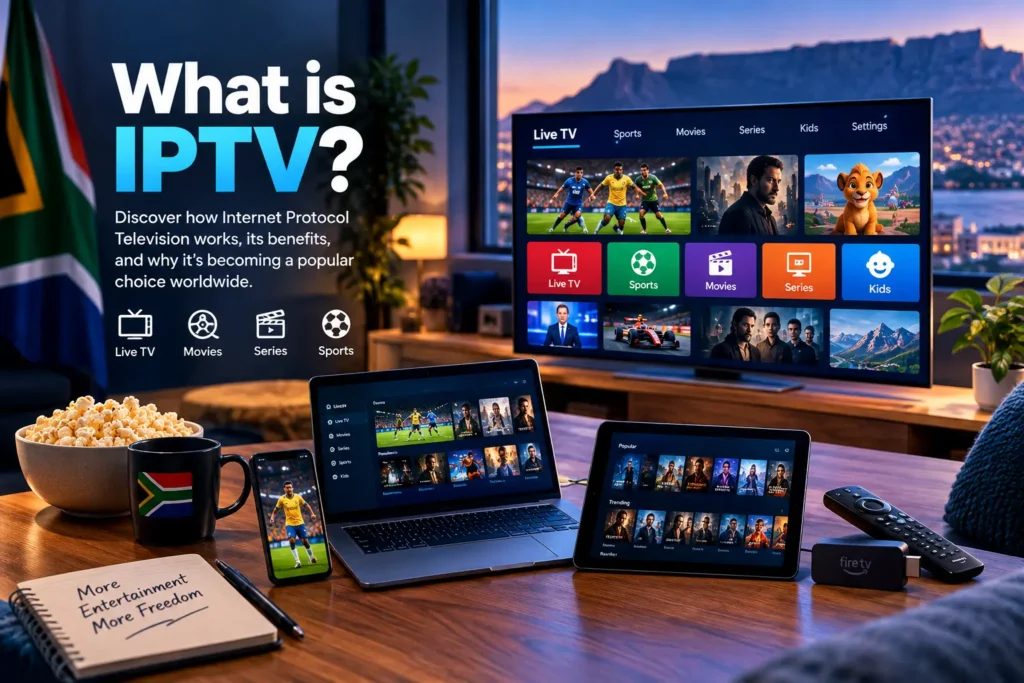
IPTV stands for Internet Protocol Television. It is a way of delivering television and multimedia content through IP-based networks instead of relying exclusively on traditional broadcast, satellite, or cable television systems.
The International Telecommunication Union (ITU) defines IPTV as multimedia services such as television, video, audio, text, graphics, and data delivered through IP-based networks with requirements for quality, security, reliability, and interactivity.
In simple terms, IPTV allows television content to be delivered through a network connection and displayed on compatible devices such as Smart TVs, streaming devices, computers, smartphones, and tablets.
Today, IPTV has become an important part of the broader shift toward internet-based television and on-demand entertainment.
How Does IPTV Work?
Traditional television usually depends on a specific delivery method, such as terrestrial broadcasting, satellite signals, or cable networks.
IPTV uses Internet Protocol (IP) to transport television and video data across a network.
A simplified IPTV system looks like this:
Content → IPTV Platform → Internet/IP Network → IPTV Player → TV Screen
When you choose a live channel or video, the IPTV platform delivers the requested stream through the network to your compatible device.
Depending on the service and infrastructure, IPTV can support different types of television and video experiences, including live television and video-on-demand. ITU materials also describe IPTV systems as using IP networks to deliver television and multimedia services.
The quality of the experience can depend on several factors, including your internet connection, device, network stability, streaming technology, and the provider’s infrastructure.
IPTV vs Traditional Television
One of the main differences between IPTV and traditional television is how the content reaches the viewer.
With traditional television:
- Satellite TV uses satellite signals.
- Cable TV uses cable networks.
- Terrestrial TV uses broadcast transmitters.
- IPTV uses IP-based networks to deliver television and multimedia content.
IPTV can also provide a more flexible viewing experience because internet-connected devices can support live television, on-demand video, electronic program guides, and other interactive features depending on the service.
However, IPTV does not automatically mean that every service available online is the same. The technology describes the method of delivering content; the channels, programs, features, and rights depend on the particular service provider.
What Can You Watch With IPTV?
An IPTV service can potentially include different categories of television and video content.
Depending on the provider and subscription, these can include:
Live TV
Live television allows viewers to watch channels as they are being broadcast, similar to traditional television.
Sports
Some IPTV services offer sports programming and live events. Availability depends on the provider and the broadcasting rights in the relevant region.
Movies
Some services include movie libraries that allow subscribers to watch films on demand.
TV Series
Video-on-demand libraries can also include television series and other episodic content.
News and International Channels
IPTV platforms can make it possible to organize channels from different regions and categories in one interface, depending on the service.
For this reason, people searching for an IPTV subscription often compare services based on channel selection, video quality, supported devices, reliability, and available features.
What Devices Support IPTV?
One of the major advantages of modern IPTV services is device flexibility.
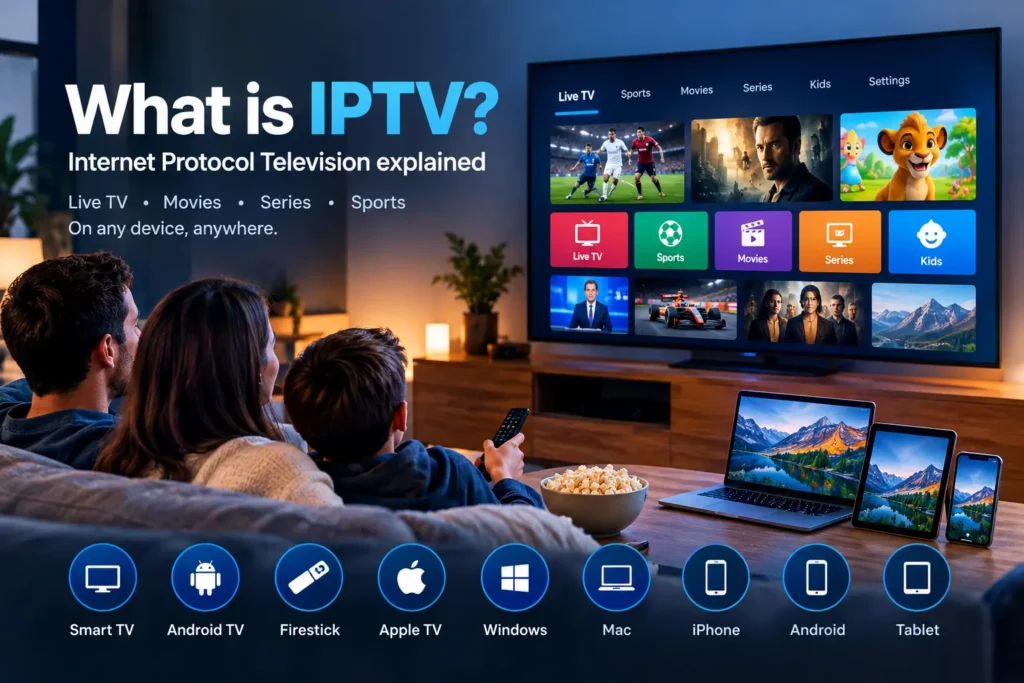
Depending on the IPTV provider and compatible application, IPTV can be used on:
- Smart TVs
- Android TV devices
- Amazon Fire TV devices
- Apple TV
- Windows PCs
- Mac computers
- Android smartphones
- iPhones and iPads
- Tablets
You normally need an IPTV-compatible application or player to access your subscription.
The exact setup process depends on the device and the application being used.
What Is an IPTV Player?
An IPTV player is an application that can display IPTV streams on a compatible device.
The player itself does not necessarily provide television channels. In many setups, the user receives access information or a playlist from an IPTV service and enters it into the compatible player.
Common IPTV applications can offer features such as:
- Live channel playback
- Electronic program guides
- Favorites
- Categories
- Video-on-demand sections
- Multiple audio or subtitle options, where available
The available features depend on the application and IPTV service.
What Internet Speed Do You Need for IPTV?
Your internet connection can have a significant impact on IPTV streaming quality.
A faster and more stable connection generally makes it easier to stream higher-quality video, particularly HD, Full HD, and 4K content.
However, speed is not the only factor.
Your experience can also be affected by:
- Wi-Fi signal strength
- Network congestion
- Router performance
- Device capabilities
- Server capacity
- Distance from network infrastructure
- Streaming technology
For the best experience, a stable connection is usually more important than simply having a high maximum download speed.
Is IPTV Legal?
The word IPTV itself does not mean illegal streaming. IPTV is a technology for delivering television and multimedia services over IP networks.
The important question is what content a particular IPTV provider distributes and whether it has the necessary rights or authorization to distribute that content.
Therefore, when choosing an IPTV provider, it is important to consider the provider’s terms, the content it offers, and whether the service is authorized to distribute that programming in your region.
This distinction is important because IPTV technology and unauthorized content distribution are two different things.
How to Choose an IPTV Service
If you are comparing different IPTV providers, don’t look only at the number of channels advertised.
Consider factors such as:
1. Device Compatibility
Check whether the service works with your Smart TV, Firestick, Android TV, Apple TV, computer, or mobile device.
2. Streaming Quality
Look for the video qualities supported by the service, such as HD, Full HD, or 4K where available.
3. Reliability
A good IPTV experience depends on stable infrastructure and consistent streaming performance.
4. Content Selection
Check whether the service offers the categories you actually want to watch, rather than choosing purely based on a large channel count.
5. Customer Support
Responsive support can make installation and troubleshooting much easier, especially for first-time IPTV users.
6. Setup Process
A straightforward activation and installation process can save time when setting up IPTV on a new device.
IPTV in South Africa
IPTV is also becoming an option for viewers in South Africa who want to access television and entertainment through internet-connected devices.
Instead of being limited to one type of television hardware, viewers can use compatible Smart TVs, streaming devices, computers, and mobile devices depending on the service they choose.
For South African users, factors such as device compatibility, streaming stability, available content, customer support, and subscription flexibility can be important when comparing an IPTV South Africa service.
IPTV South Africa: Our Service
If you’re looking for an IPTV service in South Africa, IPTV South Africa provides a multi-device streaming solution designed for viewers who want live TV, sports, movies, and series through compatible devices.
Our service supports popular platforms including Smart TVs, Android TV, Firestick, Apple TV, Windows, Mac, iPhone, and Android devices, making it possible to use the same IPTV service across different types of screens.
We also provide setup assistance for customers who need help getting started.
If you’re interested in learning more about our IPTV subscription, you can explore the available service options and supported devices on our website.
👉 Discover IPTV South Africa: IPTV South Africa
Frequently Asked Questions About IPTV
What does IPTV stand for?
IPTV stands for Internet Protocol Television. It refers to television and multimedia services delivered through IP-based networks.
Is IPTV the same as Netflix?
No. IPTV is a method of delivering television and multimedia services over IP networks, while Netflix is a specific streaming service and platform.
Can I watch IPTV on a Smart TV?
Yes, many IPTV services can be used on compatible Smart TVs through supported IPTV applications.
Do I need a special IPTV box?
Not necessarily. Depending on the service, you may be able to use a Smart TV, Firestick, Android TV device, computer, smartphone, or another compatible device.
Does IPTV require internet?
Yes. Since IPTV relies on IP-based network delivery, an appropriate network connection is required.
Is IPTV available in South Africa?
Yes. IPTV services can be used in South Africa, provided the service and its content are available and authorized for the relevant market.
Final Thoughts
So, what is IPTV? In simple terms, IPTV is a technology that delivers television and multimedia content through IP-based networks. It can support live TV, video-on-demand, sports, movies, series, and other digital entertainment depending on the service.
Its flexibility across Smart TVs, streaming devices, computers, and mobile devices is one reason IPTV has become an increasingly familiar alternative to traditional television delivery.
When choosing an IPTV subscription, focus on content, compatibility, streaming quality, reliability, customer support, and the provider’s authorization to distribute its content rather than simply choosing the service with the biggest advertised channel count.
For viewers searching specifically for an IPTV South Africa service, you can learn more about our platform and supported devices here: